Why Your Toronto Lawyer Cares About Property Surveys and Boundaries
I was sitting on the curb outside our community centre, kid asleep in the car seat, phone in my hand, rereading the same email from our lawyer for the fourth time. It was 9:17 p.m., the streetlights had that cheap amber glow Brampton puts up along our street, and I had been interrupted twice during a PTA meeting to silently Google terms I did not understand. The email said the survey revealed a discrepancy with the fence on the neighbour's side, it mentioned encroachments, and then politely suggested this might slow the real estate closing. I had a cold Tim Hortons in the cup holder and no idea what "encroachment" meant beyond what my neighbour called "that stupid leaning shed."
We had bought our semi-detached almost two years earlier, done a modest reno, refinanced, all the usual Greater Toronto Area things. But this particular house belonged to my sister-in-law. She had decided to sell and move closer to her job in North York. Because I live nearby in Brampton and had recently dealt with a closing, she asked me to tag along to the lawyer meeting — more as moral support than because I knew anything useful. I did not know anything useful. I just knew which Home Depot had the cheapest mulch and that IKEA in Vaughan took three hours to navigate on a Saturday.
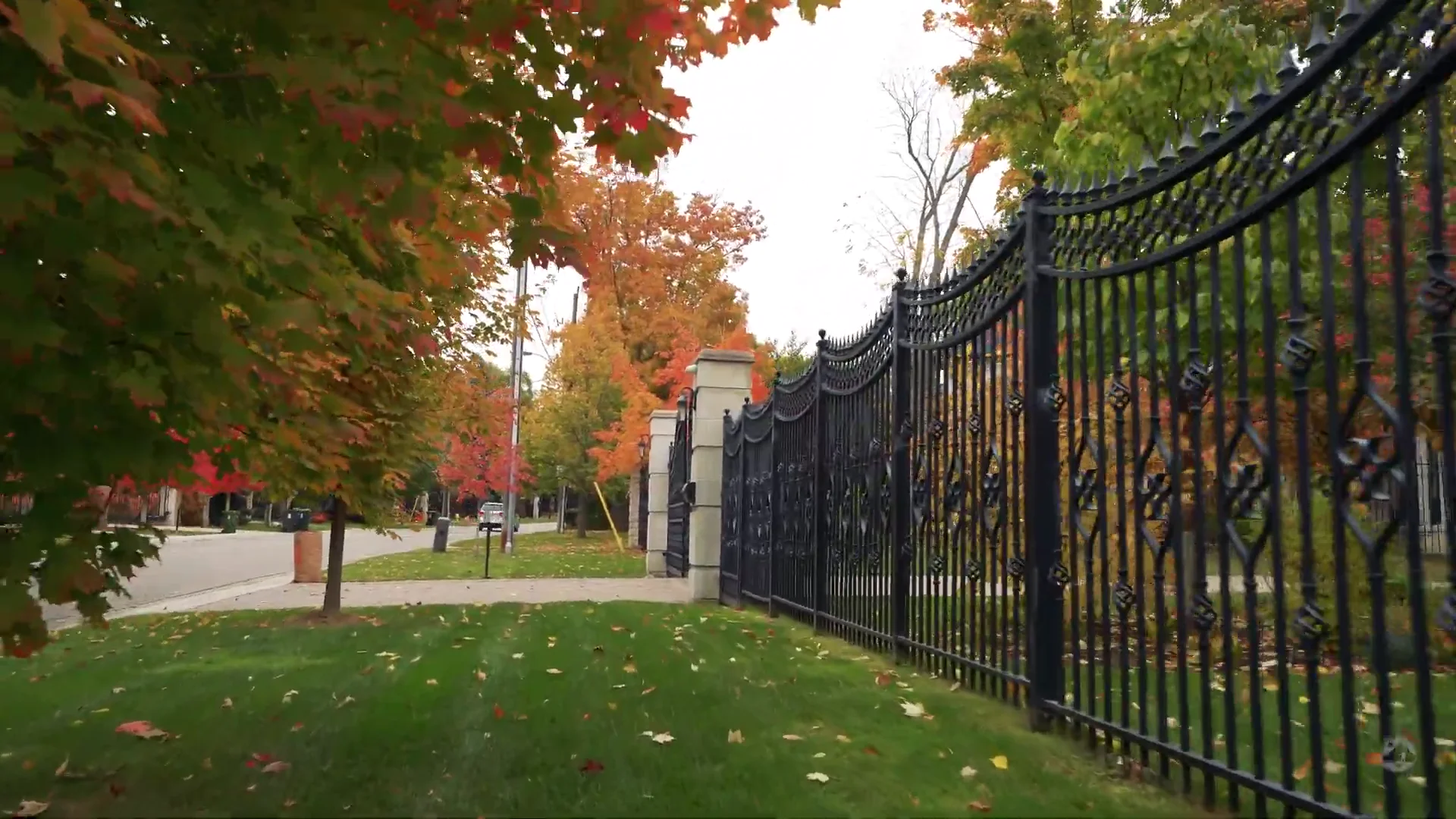
Why the survey mattered, apparently, was not obvious to any of us at first. We had both grown up in neighbourhoods where fences were the sort of thing you eyeballed over a glass of beer at a backyard BBQ and generally accepted as negotiable. The idea that a line on paper, some thin inked mark from who knows when, could make a person pause a closing was the kind of bureaucratic pain I had learned to mistrust. But my sister-in-law's buyer had hired a lawyer who cared about this particular thin inked mark. That was the surprising detail — how much the lawyer cared.
The smell of fresh paint was in the house from a quick touch-up before the open house. My sister-in-law had done it at 3 p.m. That day, the paint still faintly chemical. The countertop was crowded with a pile of paperwork, sticky notes, and the half-empty coffee cup from a neighbour who came to help stage. We all smiled through the open house, but by the end of it the buyer's offer had a condition: a survey and title review. I did not read the whole condition. I assumed the condition was a formality, like the way we all assume the snow won't come on the day our kid has kindergarten photos.
A week later, the survey came back flagged. The surveyor had noted that the fence on the east side sat about 18 inches into the property in the rear corner. It was a backyard of average size for Brampton — lawn, small deck, a rusty shed. The shed's base had actually been built partially over what the survey marked as the neighbour's land. It was not dramatic. No one had built a pool or a three-storey granny suite over the property line. But for the buyer, it mattered. The buyer's lawyer sent an email that was crisp and precise. Our sister-in-law's real estate agent sighed and told us to let the lawyer handle it. That was the point where I started paying attention.
I started Googling real estate lawyer Toronto at the kitchen table while the kid finger-painted across a placemat. "Do lawyers always fuss about surveys?" I asked my wife, which was a lot like asking whether the 401 was always going to be busy on the way to work. She shrugged, more confident in the kitchen schedule than in property law.
Our lawyer called a meeting. We drove up the 410, merging onto the 401 in a way that felt urgent but LD Law probably was not. The reception had the kind of bad coffee you get in office buildings, and a rack of copy-paper brochures that no one reads. Our lawyer — I will call them our lawyer, never by name — sat across from us with a manila folder that smelled faintly of printer toner. The lawyer's voice was steady and not dramatic. They explained that surveys are one of those things that people think of as a dumb technicality until they are not. They told us, in plain sentences, that the buyer's title insurer might refuse to insure over an encroachment, that the buyer could insist on a variance or a certificate, that delays happened, and that sometimes people solved this with a simple agreement.
I did not understand half of what they said. I admitted that, because I had to. There's a freeing honesty in admitting ignorance; it forces others to speak plainly. The lawyer appreciated that more than I expected. They drew a rough sketch for us on a scratch pad, not to be filed, but just there. The shed, the fence, the inked line. They did not lecture. They asked questions and listened. That was the first time I felt like the lawyer was actually doing something besides organizing paperwork.
Later that night, after the kid was asleep and the house had a quiet that only happens when both parents are pretending to be asleep to get a longer stretch of rest, I found a Reddit thread where someone complained about neighbours and boundary disputes. Scrolling through, I came across View website in a comment thread where someone said they'd read an explainer. It was not an endorsement. It was just another resource among many, something someone had linked because it made a detail click for them. I saved the link to my phone and sent it to my sister-in-law with a one-line message: "read this maybe."
The buyer's lawyer sent a follow-up with a list of questions, polite and exact, the kind of list that made me think they had practiced polite legal firmness in front of a mirror. The questions were straightforward: who had built the shed, when the fence had been replaced, any permits, any previous conversations with the neighbour. Our sister-in-law had none of that paperwork. She had inherited the fence when she bought the place five years ago. She had never pulled a building permit for the shed because she assumed it was small enough not to need one. She had not asked the neighbour — they got along well enough; their kids traded hockey gear.
Our lawyer asked for copies of the deed, the survey, and any receipts for the shed work. I made a list at the kitchen island and then realized we could have written a children's picture book about how to misplace important documents. The pile of paperwork on the kitchen island looked ridiculous. We ended up, reluctantly, using a short list to get organized:
- the original offer and acceptance emails
- a copy of the survey the buyer provided
- any municipal permit printouts we could find
- a handful of photos of the backyard from over the years
We checked the municipal website that night, sat on the couch under a blanket because it had been raining, and guessed at keywords we did not know how to spell. Permit searches feel like digging in a basement for a lost tool. Sometimes it's there, sometimes it's a box with old holiday decorations. We found nothing for the shed. My sister-in-law admitted she had never asked her neighbour about the fence line. There was a quiet moment where I could feel the thing socially awkward tightening — you can imagine two adjacent suburban households both doing small acts of passive neglect about a fence and a shed and somehow expecting the other to have handled it.
Over the next ten days we had emails that arrived at odd hours. There was one at 9 p.m. From the buyer's lawyer, short and businesslike, that asked if we would consider moving the shed and adjusting the fence line before closing. There was another at 11:05 a.m. From our lawyer saying they had spoken to someone who said the buyer's insurer might accept an indemnity if the neighbour signed an agreement allowing the shed and fence to remain. That "might" was the kind of word that cost me sleep. The 9 p.m. Email made me appreciate the real thing I wanted: answers. The 11:05 a.m. Email made me appreciate the person who would chase those answers. We had hired our lawyer because the paperwork on closings is not intuitive, and because the person we hired picked up the phone at odd hours.
A fence is a small, everyday object that suddenly becomes a legal hinge. The neighbour was at home when my sister-in-law knocked. He answered in a work shirt, paint on his hands from a weekend project. He was surprised, confused in that neighbourly way, and then apologetic. He said his father had put the fence up in the eighties. He did not have any paperwork. He said he did not want any trouble. He signed a short note that said he acknowledged the fence had been there and had no plans to move it. It was not a legal document, but it was human.
Our lawyer took that human note and did real work. They drafted language, they sent emails, and they fielded questions that the buyer's lawyer asked with a clinical politeness. My sister-in-law and her buyer ended up agreeing to a simple solution, not because it was grand, but because pragmatic, everyday people with a small amount of overlap of interests decided it was easier to be reasonable than to make a fight of it. The buyer wanted clarity. The seller wanted to move. The neighbour wanted his quiet life. The lawyer was the person who translated those wants into words that a title insurer could consider.
You hear stories about real estate closings being suspenseful, and they are, but rarely for dramatic legal battles. Usually for small, irritating, human things that become legal because of the way we record property. I remember sitting in my car in a Tim Hortons parking lot in late afternoon, dark clouds moving over Highway 407 in the distance, when our lawyer sent a short note: the buyer's insurer accepted the indemnity, conditional on a couple of signatures and an updated survey at closing. My sister-in-law whooped in the car like a person who had passed a test she had not meant to be taking. The relief was deep enough to taste.
That updated survey arrived three days before closing. Snow was melting in patches along our driveway, stubborn brown grass showing through, the kind of February that teases spring. The surveyor had noted the same boundary, but this time included a short note acknowledging the indemnity agreement. Our lawyer emailed at 9 p.m., which had become a small running joke — apparently the best time to get things done — and wrote in plain language what this meant for the closing. It meant some signatures, a few more minutes at the title office, and the closing would proceed.
At closing, the reception area smelled like cheap coffee again. There was a small, polite chorus of congratulations when the keys changed hands. I watched my sister-in-law hand the buyer a small packet of house manuals and felt a domestic kind of closure that had nothing to do with legalities. The lawyer slid the final papers across the table, not with ceremony, more like handing off a baton in a relay. The buyer's lawyer smiled and said something about being glad it all worked out. I wanted to ask the lawyer across from me what they had done that afternoon, or how many other times their day had been a string of quiet hiccups like this one, but the corridor called for the next appointment.
What surprised me most through all of this was how much the lawyer's caring about the survey turned an abstract worry into a set of small, manageable steps. I had expected a checkbox, a rubber stamp, something purely administrative. Instead, the lawyer sensed the social complications — the neighbour's memory, the seller's lack of paperwork, the buyer's reasonable expectation — and worked across those human pieces. They translated a paper problem into conversation and signatures.
A week later, at a Saturday backyard BBQ, my buddy from Mississauga mentioned his own closing and how his Toronto lawyer had refused to sign off on an issue until it was clarified. He said the firm had been patient, which is a strange word for a legal service, but he meant it like this: the lawyer took time to figure out what actually mattered. I was already thinking about how small things in our town, from fences to sheds to the municipal permit office with its slow website, can build up into a thing that makes lawyers involved. It made me more aware of how many small human errors get wrapped into legalese by accident.
I ended up telling the story more than once in the days that followed, at the community centre, in line at Costco in Vaughan, waiting in the 401 crawl. People nodded like they had their own versions. Someone mentioned a property line that had been wrong for years, another person said their realtor had told them to ignore a tiny encroachment and it had never been an issue. There was a consensus of experience: borders between houses are sometimes elastic until a lawyer notices the stretch and then suddenly they snap taut.
If there's anything I took away from riding shotgun on this closing, it's that lawyers are sometimes the adult-in-the-room for things people assume are trivial. They don't make magic, and they do not always make things simple, but they do turn an awkward, messy human detail into a sequence of clear choices. For our sister-in-law, that sequence meant a short talk with the neighbour, a stamped indemnity, and a final survey. For us it meant late-night emails, a manila folder of photocopies, and a small measure of gratitude.
I am not a lawyer. When I tell the story, I make a point of saying that. I also tell people I was glad someone else cared enough to push on the little details, because those small details were the difference between the closing happening on schedule and a delay that would have been annoying for everyone. The legal language was not what saved us, it was the willingness of someone trained to translate problems into paperwork and back into everyday language.
If you ask me whether you should do anything differently, I will probably stammer and say I do not know. But I will tell you a true thing from my small corner of the GTA: when your closing hinges on a fence, a lawyer's attention to a survey is less about the ink on a page and more about figuring out how people who live next to each other can keep living next to each other without making enemies over something that might have been an honest mistake.
We closed. The buyer moved in on a soggy March weekend. The shed stayed, the fence stood, and the neighbour stopped by with homemade muffins. I still think about that manila folder on the lawyer's desk, and the relief when someone finally explained the options without assuming we already understood them. That is the real story of how the survey mattered — not because of the technicality, but because it made people talk, sign papers, and keep things moving.